


WHY THE CHOICE OF COOLANT IS IMPORTANT FOR AN ENGINE? PART 2.
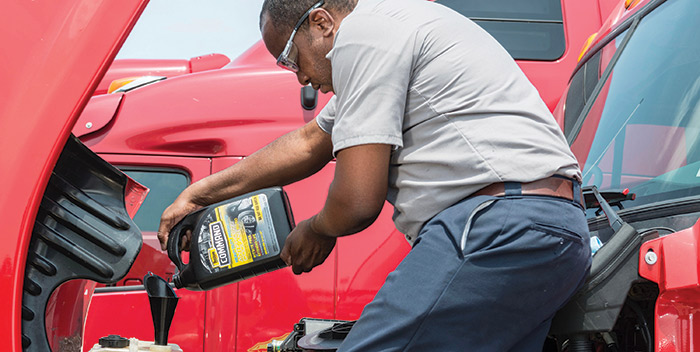
Engine coolants in older trucks consisted mostly of brass, rubber parts, and cast iron, and they were all pretty much the same. Now truck cooling systems use parts made up of copper, silicon, nylon, steel, magnesium, and aluminum alloys. What kind of coolant your truck needs nowadays depends on the year of manufacture, make, model, engine, and even where it was manufactured. Considering the many variables, truck owners must choose which coolant is right for their truck.
What are the consequences of using the wrong coolant?
Corrosion and component degradation can have long-term consequences if the correct coolant is not used in your system. They can be latent, meaning corrosion damage, deposits and clogs can show up within a year. Drivers often misdiagnose this as a radiator malfunction, instead of recognizing that the wrong coolant was used. You may want to seek advice from your local truck mechanic. A faulty cooling system is likely the source of a severely corroded radiator or a radiator clogged with deposits.
Because coolant problems occur inside the engine, you may not notice the extent of the damage unless you inspect the cooling ducts and internal heat transfer surfaces of the engine, or if you hire a truck mechanic to do the job right.
When should I change the coolant in my truck?
As engine technology advances, the length of time between coolant changes is steadily increasing.
Until two decades ago, changing the coolant every two years was a common recommendation. Then, about a decade ago, it was extended to five years. The cooling systems of many modern vehicles are designed for an even longer period of time before the coolant needs to be changed.
Different materials of construction, different operating situations, different variable flow rates, different peak temperatures, and pressures, different elastomers, different non-metallic materials, and gaskets - take your pick - every truck is different.
But they all have one thing in common: They need to be protected. Your vehicle's original equipment manufacturer (OEM) conducts significant testing to decide which fluids, including coolant, should be used in the systems they design. And if you ever need a truck fleet repair, you should turn to the experts.
Maintenance and repairing of truck cooling systems
Your truck can be very reliable, but it, like any machine, can suffer serious and permanent damage if it overheats. Your truck's engine cooling system is critical to the smooth operation of your truck and your business. If your commercial vehicle has an "Engine Temperature" light on or the temperature gauge shows "high," you should take it to a qualified mechanic as soon as possible to avoid engine failure and damage. Even better, have your truck's cooling system serviced by a qualified mechanic before it has to be repaired.
Conclusion
Having your repairs and maintenance handled at Tacoma Truck Repair Center is an excellent method to obtain the proper coolant to keep your vehicle on the road and performing smoothly.